West Highland Way (Snippet)

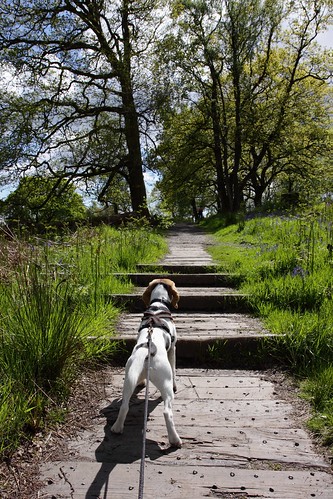
On Friday we fancied a change of pace so we headed back out to Mugdock Park and went along a short section of the West Highland Way. Our previous visit to the park had been a Biggles bayathon but this time he was much calmer, even with rabits and squirrels just a few yards away. I don’t if that was because he’s getting older or because it was his second visit and therefore old hat, but it made for a very peaceful and enjoyable walk.
IMG_1543

IMG_1564

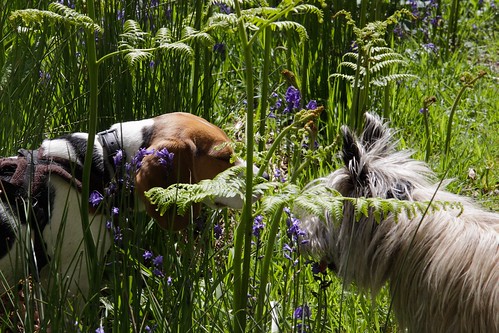
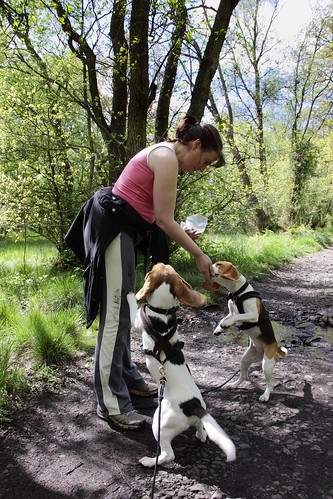
Shortly before we joined the WHW Biggles made a new friend amongst the Bluebells, and Susan broke out the sausages for a quick bit of emergency recall practice (an on lead walk can be the best time for this!)
IMG_1546

IMG_1561

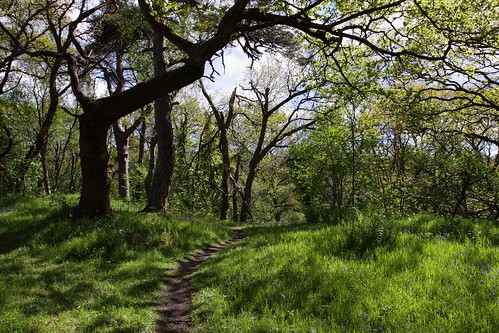
Then we got properly under way. The West Highland Way is around 95 miles long and goes through moors, woodland and mountains, but the little bit of it that we were walking along was easy going and very picturesque.

IMG_1566

IMG_1567

IMG_1570

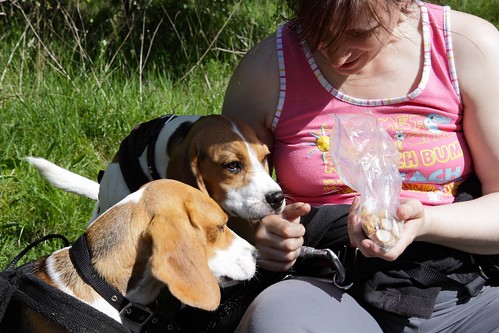
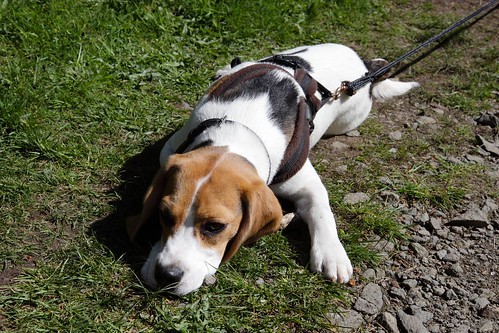
Every so often we had a little snack break. These were well received but sometimes went on a bit too long, leading to boredom for a certain member of our party.
IMG_1579

IMG_1578

IMG_1573

C’mon let’s go!

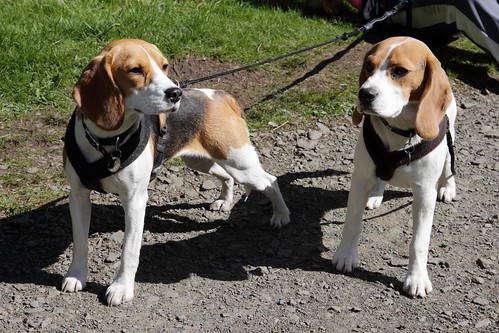
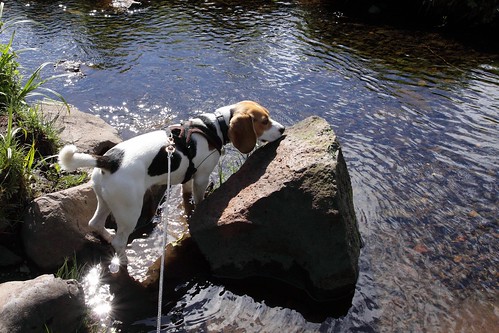
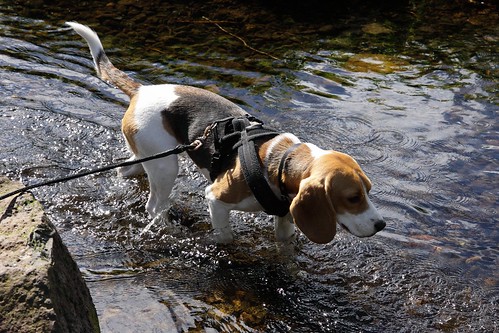
While we drank flat Iron Bru fromĀ  unpleasantly warm cans, our two Beagles got to sip fresh water and cool their paws in a sparkling stream.
IMG_1591

IMG_1593

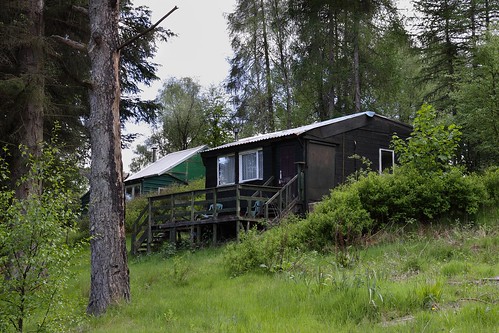
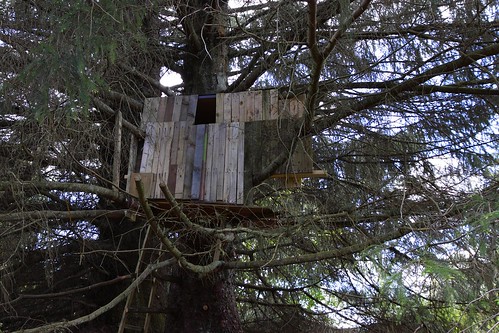
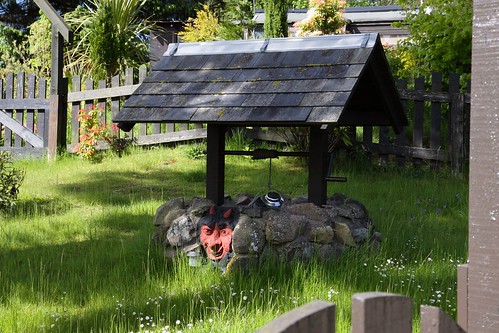
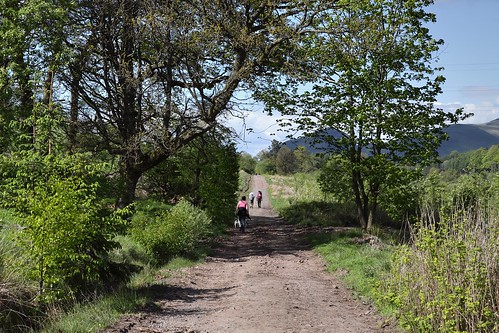
Further down the road the woods fell away and we got broader views of the countryside. We also encountered some wooden abodes that somehow made me think of Deliverance, and a garden with a very strange looking well.

IMG_1596

IMG_1602

IMG_1603

IMG_1612

IMG_1614

IMG_1607

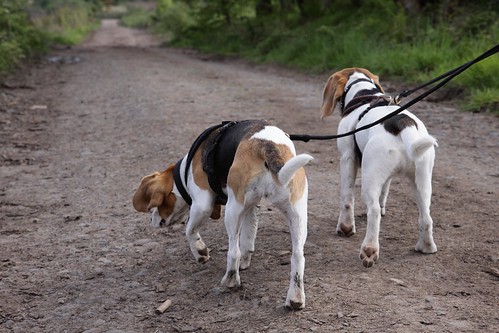
It was around this time we decided to head back home. The sausage bag was empty, tea time was fast approaching, and anyway none of us are particularly good at playing the banjo.
IMG_1616

Two intrepid Beagle bums on their way back home for tea

Beanie’s Allergies – Update

Last year at about this time Beanie started itching. She’d rub her face and ears on the carpet and scratch all over her body. She also had several outbreaks of pyoderma on her tummy, and a red rash. Atopy (i.e. allergies to things like pollen and house mites) quickly became the most likely culprit.

Typically, vets won’t do tests for this until a dog is about 2 years old as the allergies are still developing and results are unreliable. Consequently, the most promising treatment for the condition – immunotherapy – can’t be started until this time. We weren’t happy to sit back and do nothing while the condition worsened. Not least because it’s virtually guaranteed that an atopic dog will get worse over time and develop more allergies. If we had an idea of what she was allergic to we could perhaps avoid the allergens, and if we started immunotherapy now then surely it would minimise her allergic reactions and stop her from becoming sensitised to yet more allergens? Paul suffers from allergies and in his experience when the body reacts to an allergen it goes into a heightened state and easily develops new allergies. Fortunately our vet agreed with our reasoning and the tests were done late last summer when Beanie was about 10 months old.

The results came back showing mild allergies (BA Units 250 – 420) to a wide range of grass, weed and tree pollens. Her ‘allergy season’ ran from February to late September (and sure enough the itching stopped over the winter months). We started her on immunotherapy in October and kept our fingers crossed that it would have started to work when her allergy season started up again in February.

This February we did in fact see a bit of very mild scratching start and it’s continued on and off. It’s so mild that it doesn’t bother her in the least. We’ve found that we can stop it all together simply by rinsing her off when she’s out in long WET grass. She’s fine when the weather is dry. This could be because the wet grass is saturated with pollen and it rubs off onto her skin. However, our vet did mention that when a dog’s skin gets wet the cells don’t sit together smoothly and there’s more space for the allergens to slip in. No sign of rashes or pyoderma so far!

June and July are the months when pollen counts for grasses are highest and we felt that this is what gave her the biggest problems last year – after all, she is running and playing in grass every day! So we need to wait a few more weeks before we can say for sure whether things have improved since last year.

Here are our tried and tested tips for dealing with dogs that are allergic to pollens.

First to prevent problems:

  • Fatty acid supplements
  • Daily yakult or other probiotic. This helps the immune system and tests in humans have shown that it reduces allergies. This isn’t something we’ve ever seen recommended for allergic dogs, but we tried it because of the results of human studies and we really do feel that she’s better when on the probiotics.
  • Rinse in clear water after playing in WET grass.
  • Apply Aloa and Collodial Oatmeal conditioner after rinsing

AVOID STEROIDS AND ANTIBIOTICS AT ALL COSTS – WORK HARD ON PREVENTION.

And if itching or pyoderma does break out:

  • Collodial oatmeal baths give a couple of days relief from itching (just fling some ground down oatmeal in the bath).
  • NEEM extract (a couple of drops in a glass of water) wiped over spots seems to dry up pyoderma within a couple of hours. This works for us where all the strong medications from the vet fails! Beanie also seems to like us to put it on her skin.
  • We found weekly Malaseb baths helpful last year, but that was before we discovered the magic of NEEM.
  • Antihistamines only worked a little bit for us if we gave her fairly high does only when she was particularly itchy. We suspect it was the effect of the sedation rather than anything else. Beanie is a very ‘hyper’ little dog and we have read that very active dogs tend to scratch more. So we’re also trying massage and relaxation techniques with her.

Bottom line is that she’s fine now. We only see the mild symptoms because we’re watching for it. If we get through the summer we’ll try delaying her immunotherapy shots next year to see if she really needs them.

Biggles has Graduated!

We haven’t managed to take Beanie or Biggles to obedience classes for a few weeks due to work commitments. Tonight was our first night back (Biggles’ class tonight, Beanie tomorrow) and I was a little apprehensive as whilst we’ve been working hard on training it’s been mostly recall related. I honestly expected Biggles to have problems remembering what to do.

Biggles gave everyone a big surprise. Teachers Val and Carol couldn’t believe how calm and laid back he was since they saw him last – in fact I was accused of drugging him at one point! He was as good as gold, and performed without treats even. When told to sit and stay he kept his bum stuck to the floor no matter what chaos was going on around him. The only slight problem was a tendency to roll onto his back for a tummy tickle mid-way through ‘down-stay’ exercises. He did so well that he’s been promoted to the next class.

biggles-graduation

Here’s hoping that Beanie does just as well in her advanced class tomorrow night!

And whilst on the subject of training, our emergency recall practice seems to be paying off. We’ve been working hard on it for two or three months now and over the past few days we’ve tried it out while Beanie and Biggles were some distance away from us and quite engrossed in what they are doing. It’s worked every time. The moment we call they stop what they’re doing and run to us like little bullets. Today we decided to be brave and give it a real test…

Beanie and Biggles had clearly picked up a scent and took off at high speed, baying their heads off. Most Beagle owners (including us until today) assume that Beagles are in fact deaf when on a scent as it’s impossible to get their attention. Well, they were about 200 yards away from us and about to disappear out of the meadow and into the trees. Paul yelled our magic word at the top of his lungs and they both instantly skidded to a halt and sprinted back to us.

The fundamental rules of Really Reliable Recall are:

  • Practice recall using your emergency word three times a day
  • Use highly valued rewards, and make the reward last at least 30 seconds (i.e. keep feeding treats for 30 seconds).
  • Only use it when you are 100% certain that your dog will come to you.

We took a gamble on rule 3, but fortunately it paid off. But we won’t make a habit of this – tomorrow we’ll be sure to make it nice and easy for them.

Normal, every day recall is coming along well too. I won’t claim that it works EVERY time, but most of the time they’ll break off what they’re doing and come to us when we call.

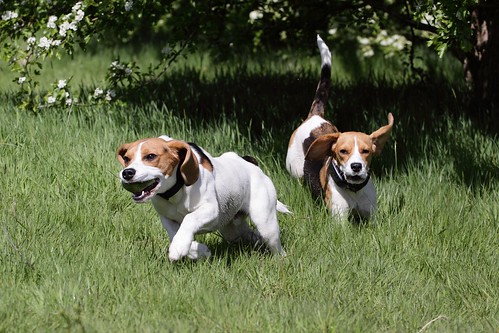
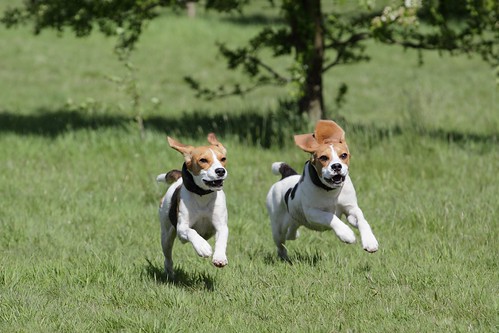
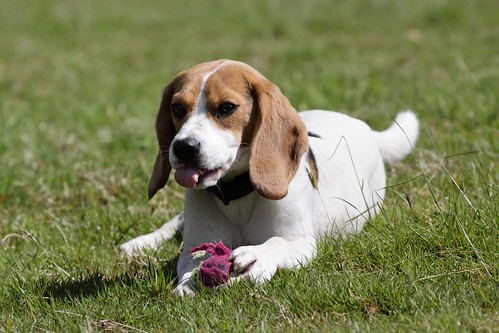
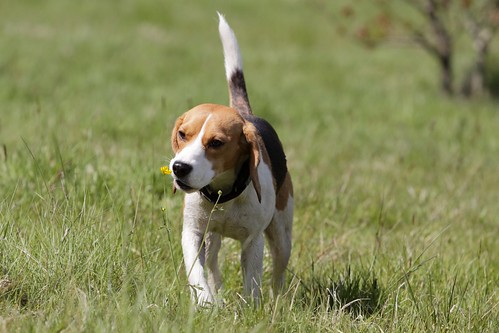
Finally, here’s a couple of pictures from today’s walk:

IMG_1439

IMG_1445

IMG_1438

IMG_1441 Blended