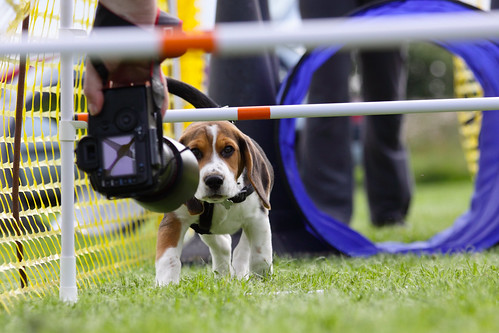
Click to Calm

For most of the past two weeks we’d mainly been taking Beanie and Biggles to the dog enclosure in one of our local parks. We’d been working hard on keeping them close and attentive. Beanie was doing brilliantly. It didn’t matter what was going on around her – she’d be stuck to my side like glue following my commands without hesitation. Biggles was capable of this too, but it was hard work getting his attention and he had more of a tendency to get distracted. He got so excited on the walk to the enclosure that he’d be baying, squealing and screeching. Totally out of control. Rather than getting better with practice he was getting more and more excited each day. We don’t allow him to pull on lead – if he tries we just stop until he calms down. Sometimes it was taking half an hour to cover the 200 yard distance from the car park. But once he got into the exercise he’d do very well.

On Saturday morning we decided to take them to our regular park to see how they’d do there. Biggles was first. He was perfect! If we could rely on Saturday’s behavior being consistent then I’d go as far as to say we have the perfect dog! The balance was just right – he’d run a little ahead but keep looking back for guidance; he’d have a little play with another dog but would break away the moment we called or walked away; he happily played fetch, tuggy and did tricks with us as we walked.

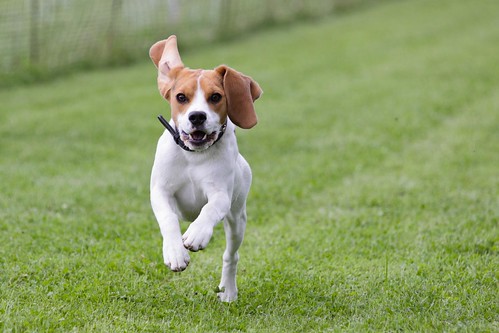
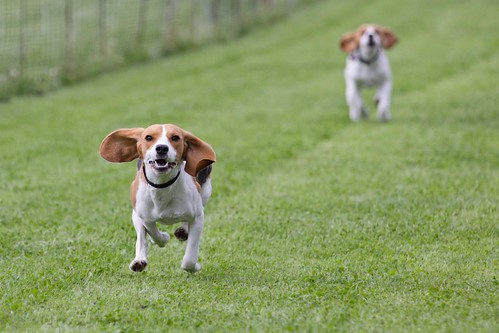
Beanie wasn’t quite as good. She ran a little further ahead of us than Biggles and looked to us for guidance a little less. But even so, she stayed in sight and for the most part responded well when we called or changed direction (The little clip shows the worst of her behavior – and it’s really not at all bad). But she was ‘twitchy’ and our feeling was that she could easily dart off at any moment.

Both of them are capable of behaving perfectly and will faultlessly follow numerous commands and do endless tricks. We’ve realized that the secret to consistency is to get them into a calm attentive state before asking them to do anything (I think I’ve been watching too much Dog Whisper!). They are both very good at excited attentive, but things are unpredictable when they are in this state – because it’s all too easy for their attention to flit from us to something else such as a scent, a rabbit, a fast moving dog. And when that happens they are over the horizon before you can blink! They always come back very quickly (2 minutes), but god only knows what they’ve been up to whilst out of sight.

So this week we’re working on rewarding a calm and attentive state (and therefore gradually making it their default state). We’re taking them to lots of stimulating places. If they start going ballistic then we’ll watch for a slightly calmer moment and click and treat it. Then we’ll try and build on that – each time clicking and treating calmer and calmer behavior. Once we’ve got calm then we work on attention. Although to be perfectly honest, once they are calm, attention becomes second nature to them. Next we’ll start walking them on a loose lead. If they pull we stop until they look at us calmly. If they keep looking at us calmly we’ll click and treat. Gradually they need to look at us for longer and longer between treats.

At this stage we’re ready to start working on our off-lead exercise. For now we’re keeping them on a very long training line. I don’t think we need it – the dogs behave perfectly. But it’s early days and we don’t want any setbacks. We aren’t giving them any commands at this stage. They associate training with excitement so by telling them to do something we can ramp up the excitement – we don’t want this. They’re sticking to us like glue so it’s not necessary to say anything. The commands (tricks etc) only start when we’re confident that they are completely calm and attentive. And they only get rewarded when they follow the commands calmly.

It’s working well. It took a lot of patience at first. At one point I think Paul stood motionless in the middle of a field for 30 minutes with a baying, screeching Biggles straining on the end of his lead. But gradually Biggles figured out that the only way to get what he wanted was to be calm and attentive. They key is to say and do nothing – just wait for the dog to figure it out. In each new stimulating situation we’re finding that the excitement starts out slightly lower, and we are able to ramp it down much more quickly.
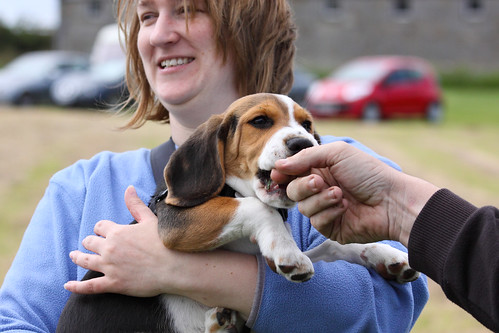
More Beagle Racing

We headed up early as usual so that Beanie and Biggles could get their private races while it was nice and quiet. Unfortunately Beanie’s favorite lure-meister Scooby wasn’t there. That left us with some serious time to kill until the official races were over and private runs could take place. Happily this passed really quickly because we bumped into a little Beagle boy called Breac and his owners.

IMG_3649

We swapped stories about Beagle naughtiness and found out that Breac has his own blog too:

http://breacthebeagle.blogspot.com/

Maggie soon arrived and broke the good news that the experienced dogs would be racing separately from the inexperienced dogs. This was a very welcome attempt to address the problems of unruly dogs in previous weeks. In light of this we decided we’d let Beanie and Biggles enter the official races. After all, there was no guarantee there’d be time for them to get private races at the end.

A few newbie racers had arrived and they were ‘schooled’ before racing got underway. All did very well and were extremely well behaved. They all earned their place in the main races.

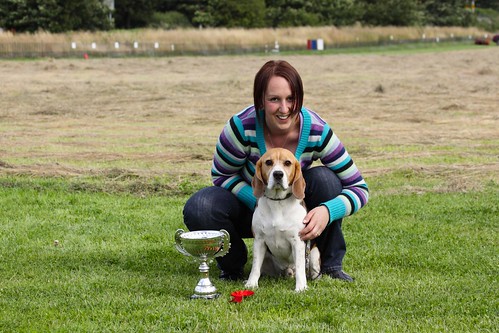
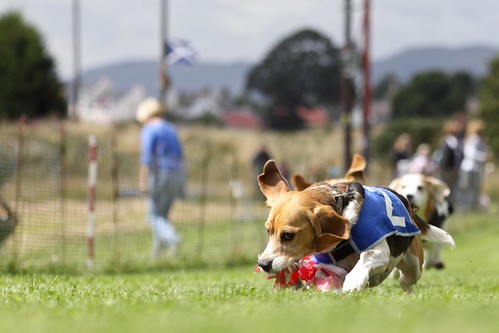
The Dog Trophy race was scheduled for this week and our little Biggles romped in a close second beating last year’s champion! Not bad for a little 11 month old boy! He got a few nice compliments from the race officials – he was running beautifully and shaping up very nicely indeed. Murphy won the race despite the fact that he had only recently recovered from a leg injury and wasn’t at his peak of fitness. Here he is with proud mum Carolyn and yet another trophy for his ever growing collection.

IMG_3708

IMG_3839

Then the rest of the racing got underway. However, all dogs were racing together as normal. Dogs that had caused problems in the past weren’t kept separate. The draw was made and in Beanie’s first heat she was unfortunately drawn against the dog that harassed her and made her afraid to run last time. The dog in question meant no harm of course – he was just being overly playful but his advances were definitely not wanted by the other dogs and it was not appropriate to put him on an enclosed race-track with other, well trained dogs until he’d learned to chase the lure instead of other dogs. I discretely asked if Beanie could go into a different heat (after all this was only a fun race), but that wasn’t allowed. She had to either race this dog or withdraw completely. We withdrew, and the race proved it was the right call as the playful dog lost interest in the lure and chased one of the the other racers all over the track. He was subsequently disqualified. Clearly we’d been wise to keep Beanie out of the race but it meant a long wait for her. She was desperate to chase the lure and was getting more and more frustrated as she watched one race after another. In restrospect we should have called it a day at that point.

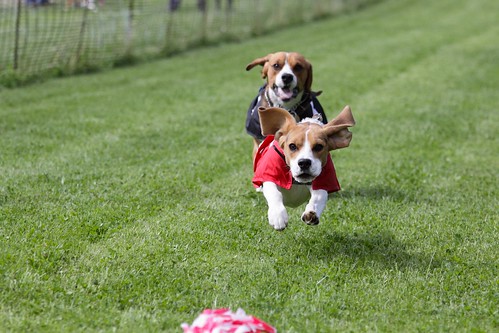
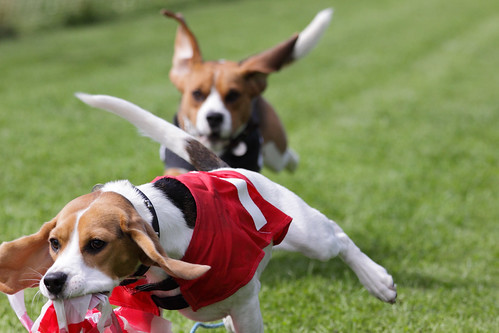
As for Biggles, he won his first two heats convincingly and qualified for the final!

IMG_3743

IMG_3746

Sadly it wasn’t plain sailing though – in his second heat a larger dog cut across three lanes and ‘body-slammed’ him two or three times. Biggles snarled at the dog but kept going. He was not happy. He’s only 11 months old and we don’t want him exposed to this kind of thing – and we most definitely don’t want him to learn he has to be aggressive towards other dogs!! We decided to withdraw him too. The offending dog was disqualified, but that didn’t help Biggles any – the harm was already done. I must stress that efforts were being made to solve the problems and I’m sure things will settle down in due course, but too late for our two. They seem to have born the brunt of so much this season. They are young, small and fast and this seems to cause other dogs to home in on them. Their welfare has to come before a daft race!

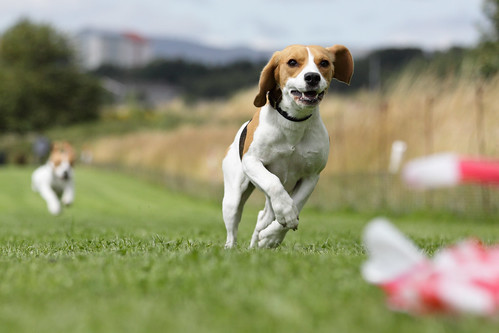
We didn’t let this spoil our day though. There was still an opportunity for Beanie and Biggles to run together after racing was over. This would help blot out any bad experiences on the track. They had two or three great runs. Then race organizer Graham asked if they’d like to help school one of the new dogs by running with it. It had proven itself to be a well behaved dog – and fast too. We jumped at it – and Beanie and Biggles thoroughly enjoyed it. The new dog did extremely well.

IMG_3761

IMG_3756

IMG_3696

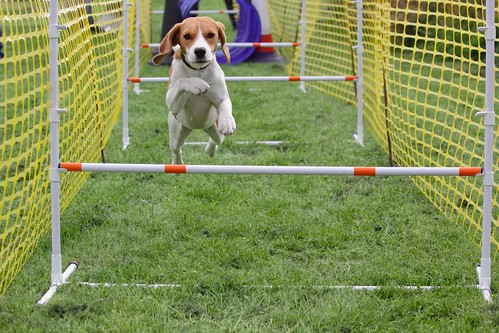
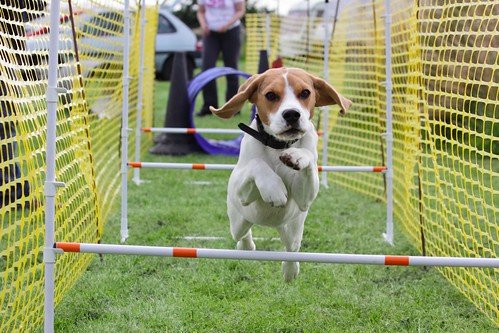
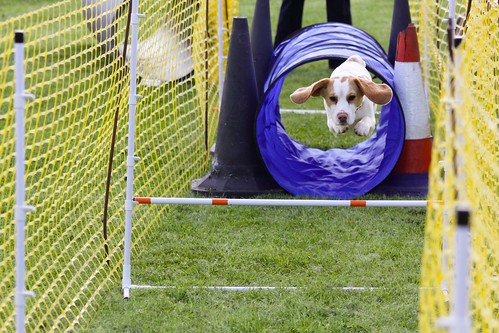
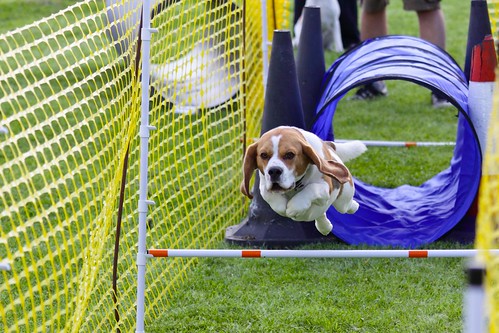
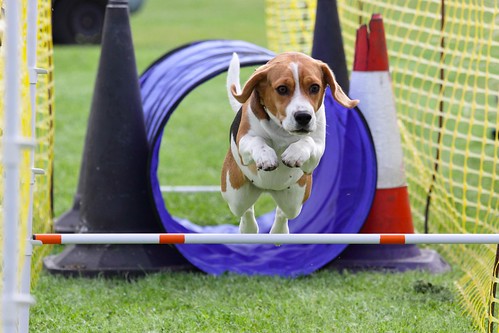
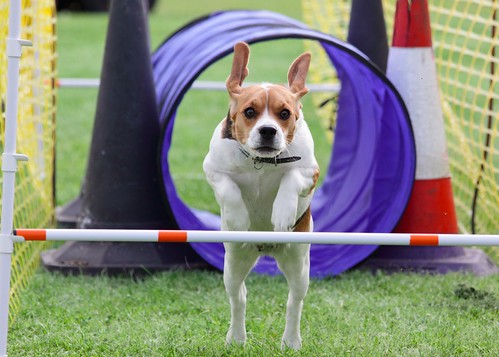
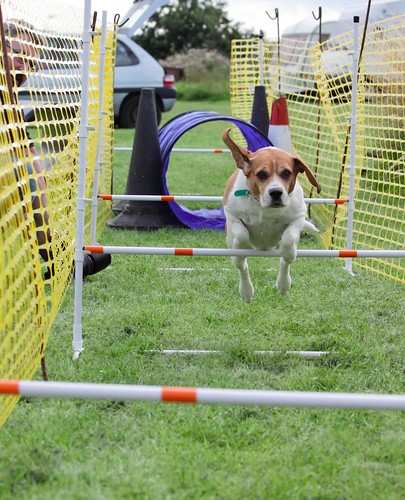
As usual we’d taken up our portable agility equipment and by the time we’d finished Beanie and Biggles’ fun runs there were quite a few Beagles eagerly waiting for a go. In fact they’d already got the enclosure erected. We all worked together to get the course up quickly and each and every one of the Beagles dazzled us with their jumping ability!

IMG_3840

IMG_3850

IMG_3808

IMG_3805

IMG_3858

IMG_3862

IMG_3811

IMG_3866

IMG_3855

Click here to see more shots from Sunday.

Off-lead Control – The Saga Continues…

When you own Beagles a big part of your life tends to focus on how to keep your dogs safe and close whilst still getting the off-lead exercise that they need to thrive. With our two it really is a full time job!

We’re quite proud of the fact that we have a reliable emergency recall which is powerful enough to pull them off a scent. However, if we use it routinely to keep them close to us it looses it’s power as they begin to associate it with curtailing of fun adventures. This has happened in the past with more casual recall commands such as ‘come’. Trainers frequently advise not to use ‘come’ to do something unpleasant to your dog – that makes sense. But what’s the point in training a recall command if your dog stops responding if you expect him to break off doing something it likes more than once in a blue moon? Clearly we need to make our dogs want to stay close rather than relying on recall all the time. But earlier attempts at being more exciting than the environment often proved disastrous.

In agility classes Beanie’s teacher had given me a few excellent tips that really kept Beanie’s attention on me during classes. She has a Parsons Terrier (another tricky breed) that she’s trained to a high level in agility, so she’s no stranger to working with hard-to-train breeds. Her approach has some subtle variations from typical rewards-based training but these make all the difference with dogs that have been bred to work independently from their owners (read that as dogs that bugger off and do their own thing no matter how hard you work at keeping their attention). It’s astonishing how easily you can turn an apparently obstinate, stubborn, strong-willed, independent beagle into an eager to please velcro dog! So we asked her if she had any ideas that might help us whilst out in the park. She agreed to help and is confident that we can have excellent off-lead control of our dogs with a bit of work.

One exercise that she gave us was to go out into the garden with a few treats and just walk around ignoring the dog. Eventually the dog comes over to see what you’re doing and gets a treat. You keep ignoring, walking, changing direction frequently and rewarding the dog for staying close. Gradually you build up lots of tricks into the routine and make the dogs work harder for each treat – so a bit like a cross between a walk and a heelwork to music routine without the music! We also throw in some games of ‘fetch’ to help ensure that they’re getting enough exercise. The subtle but important difference is that you completely ignore the dog until it starts offering behaviors – and then you give it ‘work’ to do. I’m not sure why it works so well, but if we try and get our dogs’ attention they’ll invariably choose to ignore us. But if we ignore them then they are absolutely DESPARATE to do things for us!

As the dogs get more and more attentive the idea is to start taking the routine out to safe, quiet areas of the park. Over time we build in more distractions and field test it in lots of new places.

We’ve been doing this for a couple of weeks now and have progressed to the dog enclosure at one of our local parks. We also practice the drill pretty much everywhere we go, but with the dogs on a training line. Once we get started (which I have to admit can take a bit of effort with Biggles who’s going through a difficult stage!) we can spend a whole hour in the park enjoying our dogs undivided attention. About 20 minutes of that time is spent doing the drill described. First with the dogs working individually, then with the dogs off-lead together but each working with their own handler. Then we let both off-lead together for 10 minutes but still doing the drill with just one of us. Biggles would still quite like to play chases with Beanie and ignore us but she’s having none of it. With practice Biggles will be equally attentive. But in the meantime, without Beanie’s cooperation he settles for giving us his undivided attention. I guess we’re better than nothing! Finally we clip on the leads and take the dogs for a long walk around the park. They walk on a loose lead the whole time watching us constantly. We throw in the odd trick as we walk – which they thoroughly enjoy!

Here are some little clips showing some of the tricks that they’ve been practicing during our walks. They’re learning fast!

First Beanie:

Then Biggles:

If it’s dry tomorrow we’ll video our actual training session at the park so we can build up a record of their progress. For a chanage I’ll try and wear something that’s not full of holes!